
• Why is 2023 the best year for Surrogacy? – MediPocket Surrogacy USA

    Why is 2023 the best year for Surrogacy? – MediPocket Surrogacy USA

    Surrogacy has been practised since the Biblical era, or, as some claim, during the reign of Lord Krishna. In any case, it began as a process that assisted many people in expanding or starting their families.  Surrogacy has had many ups and downs across countries, with some accepting it and others prohibiting it. Even in India, the legal battle over commercial surrogacy lasted years. Finally, after many attempts and numerous cases of successful surrogacy, the market is expanding. Surrogacy gives birth to over 2000 babies in India alone each year, making it the fastest growing market. Many people are still unaware of the process and associate it with stigma and description.  As the world progresses, it is clear that the surrogacy process has advanced to a certain level. Let us look at why the year 2023 is the best for surrogacy.  Why are Surrogacy Laws becoming more favourable? Surrogacy legislation is gradually improving in many countries and jurisdictions around the world. This shift can be attributed to a variety of factors, including changing attitudes toward surrogacy. Let us go over some of the reasons why surrogacy laws are becoming more popular: Recognition of reproductive rights: Individuals’ rights to raise a family, regardless of biological limitations, are increasingly being recognized. Surrogacy allows intended parents who are unable to conceive or carry a child on their own to have a genetically related child and enjoy the joys of parenthood. Changing societal attitudes: Society’s acceptance of alternative family-building methods, including surrogacy, has grown. People are more willing to support and protect the rights of intended parents and surrogates as they become more aware of the various ways in which families can be formed. Reproductive technology advancements: Reproductive technology advancements have made surrogacy a safer and more accessible option for intended parents. Surrogacy risks can be mitigated with improved medical techniques, better screening processes, and stronger legal frameworks, contributing to a more positive outlook on the practice. Protection of all parties involved: Surrogacy laws have shifted to ensure the well-being and protection of all parties involved, including intended parents, surrogates, and the child. This includes creating legal frameworks that protect each party’s rights, responsibilities, and obligations, as well as promoting transparent and fair agreements. Economic benefits and regulation: Surrogacy has the potential to be economically beneficial, particularly in countries where it is regulated and supported. Countries can attract intended parents from all over the world by establishing clear legal guidelines, thereby contributing to economic growth and development in the surrogacy industry. International harmonisation and cross-border care: International efforts are being made to harmonise surrogacy laws. This enables intended parents to seek surrogacy arrangements in countries with more favourable legal frameworks, increasing accessibility and options for family-building. Surrogacy cost are decreasing Surrogacy costs have gradually decreased over time due to a variety of factors. While the overall cost of surrogacy remains high, advances in medical technology, increased competition, and evolving legal frameworks have all contributed to a decrease in costs. Let us look at the reasons for surrogacy cost reductions: Technological Advancements: Improvements in reproductive technologies and medical procedures have resulted in more efficient and successful surrogacy journeys. Assisted reproductive techniques, such as in vitro fertilization (IVF), have improved, increasing the likelihood of successful embryo implantation and decreasing the need for multiple attempts. These developments have resulted in a higher success rate per cycle, lowering the overall cost for intended parents. Surrogate availability is increasing: As surrogacy becomes more accepted and popular, more women are opting to become surrogates. Because of the increased availability of surrogates, the market has become more competitive, lowering the cost of surrogacy services. With a larger pool of potential surrogates to choose from, intended parents have more options for finding a compatible match, which can help reduce the costs associated with finding and compensating a surrogate. Options for international surrogacy: The emergence of cross-border surrogacy has allowed intended parents to investigate more affordable options in countries where surrogacy costs are typically lower. Living costs, healthcare expenses, and legal frameworks vary by country, which can contribute to a significant reduction in overall surrogacy costs for international intended parents. Increase Success rate Surrogacy success rates have steadily increased over the years as assisted reproductive technologies have advanced, screening processes have improved, and a better understanding of the factors that contribute to successful outcomes has grown. Here are some key factors that have contributed to surrogacy success rates increasing: Comprehensive medical screening: Medical screening of intended parents and surrogates has become more sophisticated and thorough. This includes assessing all parties’ physical and mental health, evaluating reproductive health, and performing genetic testing to identify potential risks and increase the likelihood of a successful pregnancy. Improved embryo selection: With the introduction of PGT, which allows for the screening of embryos for genetic abnormalities prior to implantation, the selection of high-quality embryos with a higher chance of implantation and pregnancy success has become more precise. This has contributed to higher surrogacy success rates. Better synchronisation and monitoring: Close monitoring and synchronization of the intended mother’s or egg donor’s and surrogate’s menstrual cycles has become more precise. This ensures optimal embryo transfer timing, increasing the likelihood of successful implantation and pregnancy. Fertility medication advancements: The development of more effective fertility medications has improved egg production stimulation in intended mothers or egg donors, resulting in a greater number of viable embryos for transfer and higher success rates. Individualised treatment plans: Fertility clinics and professionals now have a better understanding of individualized treatment plans based on each intended parent’s or couple’s specific needs and circumstances. Personalized protocols tailored to the unique characteristics of the individuals involved can improve surrogacy success rates. Improved laboratory techniques: such as culture media, embryo selection methods, and cryopreservation techniques, have all contributed to increased embryo viability and success rates. Medical professionals’ experience and expertise: As the expertise and experience of fertility specialists, reproductive endocrinologists, embryologists, and other medical professionals involved in the surrogacy process has grown, overall success rates have improved. Higher success

    Read more

  • Pre-IVF testing –  MediPocket Surrogacy USA

    Pre-IVF testing – MediPocket Surrogacy USA

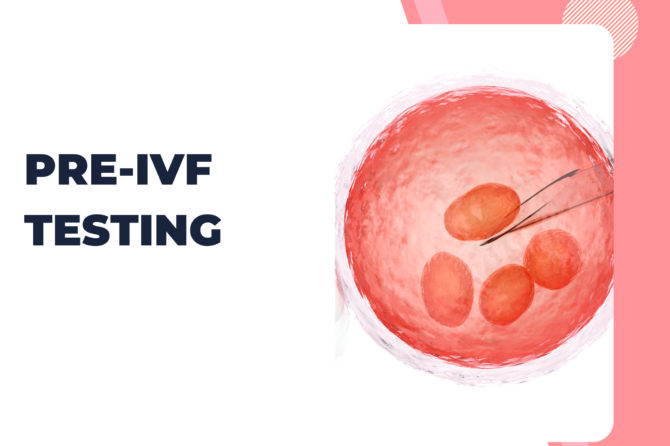
    Pre-IVF testing, also known as fertility testing or an infertility workup, is a series of medical evaluations and diagnostic tests performed on both partners prior to IVF. The goal of pre-IVF testing is to identify any potential fertility issues or underlying medical conditions that may interfere with IVF treatment success. Pre-IVF testing typically includes a thorough medical history review, physical examination, and laboratory testing.  Pre-IVF testing done in Female Some of the Common Pre-IVF testing are as follows: Cycle day 3 blood tests for FSH and Estradiol, as well as AMH As part of the pre-IVF testing process, cycle day 3 blood tests for FSH (follicle-stimulating hormone), estradiol, and AMH (anti-Mullerian hormone) are commonly performed. FSH is a pituitary hormone that plays an important role in the development of follicles in the ovaries, which then produce eggs. The FSH test measures the level of FSH in the blood on cycle day 3, which is the third day of a woman’s menstrual cycle. High FSH levels can indicate a diminished ovarian reserve, which means fewer eggs and a lower chance of conception. Estradiol is an oestrogen that is produced by the ovaries. The estradiol test, which measures the level of estradiol in the blood, is also performed on cycle day 3. High levels of estradiol can indicate that the ovaries are already producing follicles, which can make it difficult to stimulate the ovaries properly for IVF. AMH is a hormone produced by ovarian follicles that serves as a predictor of ovarian reserve. The AMH test, which measures the level of AMH in the blood, is typically performed at any time during the menstrual cycle. A low AMH level may indicate a depleted ovarian reserve, which may limit the number of eggs that can be retrieved during an IVF cycle. Fertility specialists can assess a woman’s ovarian reserve and potential response to IVF treatment by performing these cycle day 3 blood tests. This data is then used to create a personalised treatment plan that increases the chances of a successful pregnancy. Mid-Cycle Ultrasound Mid-cycle ultrasound, also known as follicular monitoring ultrasound, is a type of medical imaging test used to track the development of follicles in a woman’s ovaries during her menstrual cycle. It is typically performed on days 10-12 of the menstrual cycle, which is considered the cycle’s midpoint. A transvaginal ultrasound probe is inserted into the vagina and used to produce detailed images of the ovaries and follicles during the procedure. The thickness of the endometrial lining, as well as the size and number of follicles, are measured and recorded. Follicular monitoring ultrasound is a useful tool in the pre-IVF testing process because it allows fertility specialists to assess the development of follicles in the ovaries, which contain the eggs that will be retrieved for IVF. The ultrasound results are used to adjust the patient’s medication dosage, medication timing, and egg retrieval procedure timing. Fertility specialists can improve the chances of a successful IVF cycle by performing mid-cycle ultrasounds to ensure that the follicles are developing properly and are of optimal size for egg retrieval. This data can also be used to predict the likelihood of multiple pregnancies, which is useful for counselling patients and making informed decisions about how many embryos to transfer during IVF. Hysterosalpingogram (HSG) A hysterosalpingogram (HSG) is a medical imaging test used to assess the health and function of a woman’s uterus and fallopian tubes. It is a type of X-ray in which a contrast dye is used to highlight the reproductive organs and allow doctors to see any blockages, abnormalities, or other issues that may be affecting fertility. A thin catheter is inserted through the cervix and into the uterus during the procedure. The uterus is then injected with a contrast dye, which flows through the fallopian tubes. X-ray images are taken as the dye moves through the reproductive tract to document its progress and any blockages or abnormalities that may be present. A hysterosalpingogram is usually done during the first half of a woman’s menstrual cycle, just before ovulation. It can aid in the diagnosis of a variety of fertility-related conditions, such as uterine fibroids, polyps, or adhesions, as well as tubal blockages or abnormalities. The HSG results can be useful to fertility specialists during the pre-IVF testing process. In some cases, blockages or abnormalities discovered during the HSG can be treated with minimally invasive procedures such as hysteroscopy or laparoscopy to increase the likelihood of a successful IVF cycle.  Hysterosonogram A Hysterosonogram is a type of ultrasound test used to assess the health of the uterus. It is also known as a saline sonogram or sonohysterogram.  A sterile saline solution is injected into the uterus via a small catheter inserted into the cervix during a Hysterosonogram. The saline solution helps to expand the uterine cavity, making any abnormalities easier to see. The uterus is then imaged using an ultrasound probe, allowing the doctor to look for any growths, adhesions, or other abnormalities. The results of a Hysterosonogram can be useful to fertility specialists during the pre-IVF testing process. Uterine abnormalities discovered during the test may be treatable with minimally invasive procedures such as hysteroscopy, increasing the likelihood of a successful IVF cycle. Hysteroscopy Hysteroscopy is a minimally invasive diagnostic and surgical procedure that allows doctors to examine and treat various conditions inside the uterus. It is usually done as part of pre-IVF testing to detect and treat any underlying uterine abnormalities that may interfere with fertility. A thin, lighted tube with a camera on the end (called a hysteroscope) is inserted into the uterus through the cervix during a hysteroscopy. The camera allows the doctor to see the inside of the uterus on a monitor and identify any abnormalities like polyps, fibroids, or adhesions. If an abnormality is discovered, the doctor may remove or correct it with special instruments during the same procedure. This may include the removal of polyps or fibroids, the cutting of adhesions, or the resection of uterine

    Read more
  • An overview of surrogates – Surrogacy and IVF-Powered by MediPocket USA

    An overview of surrogates – Surrogacy and IVF-Powered by MediPocket USA

    Surrogacy is a process in which a woman (the surrogate mother) carries and gives birth to a child on behalf of another person or couple (the intended parents). Surrogacy is often used by people who are unable to conceive or carry a pregnancy to term themselves due to infertility, medical conditions, or other reasons. A surrogate is a woman who carries and gives birth to a child on behalf of another person or couple (the intended parents). Surrogacy involves a legal and ethical agreement in which the surrogate mother agrees to carry and deliver a child for the intended parents, who may be unable to conceive or carry a pregnancy to term themselves due to infertility, medical conditions, or other reasons. The surrogate mother can be either genetically related to the child (in the case of traditional surrogacy, where the surrogate’s own egg is fertilized with sperm from the intended father or donor) or not genetically related to the child (in the case of gestational surrogacy, where an embryo created through in vitro fertilization using eggs and sperm from the intended parents or donors is implanted in the surrogate’s uterus). Surrogates plays a crucial role in the surrogacy process and are often compensated for the time, effort and expense involved in pregnancy and childbirth. Surrogacy agreements typically include detailed contracts that set out the rights and responsibilities of the intended parents and surrogate mother, as well as monetary compensation and other terms of the agreement. What is a traditional surrogate mother? A conventional surrogate mother is a woman who is artificially inseminated with the sperm of the intended father or donor sperm and then bears the resultant embryo to term. The surrogate mother is genetically connected to the kid in conventional surrogacy since her own eggs are utilised to generate the embryo. Traditional surrogacy, as opposed to gestational surrogacy, in which an embryo formed from the intended parents’ or donors’ eggs and sperm is put in the surrogate’s uterus, involves the use of the surrogate mother’s own eggs. This surrogacy approach is less frequent than gestational surrogacy because it might generate legal and ethical concerns about the surrogate mother’s parental rights and duties. The surrogate mother is artificially inseminated using sperm from the intended father or a donor in a standard surrogacy arrangement. The surrogate carries the pregnancy to term and delivers the baby after the embryo is produced and put in her uterus. Following the birth of the kid, the intended parents may pursue legal action to establish their parental rights and seek custody of the child. Conventional surrogacy can provide a route to parenting for those who are unable to conceive or carry a baby to term, but it can also create difficult legal and emotional concerns about the surrogate mother’s role and parental rights. As a result, many intended parents choose gestational surrogacy, which entails the use of a surrogate who is genetically not related to the child. What is gestational surrogate? A gestational carrier is a woman who carries and gives birth to a baby for another person or couple (the intended parents). A gestational carrier, unlike a typical surrogate, is not genetically connected to the child she carries because the embryo is generated using the intended parents’ or donors’ eggs and sperm. In a gestational surrogacy arrangement, the intended mother or a donor is stimulated to develop numerous eggs, which are then harvested and fertilised in a laboratory with the intended father’s or a donor’s sperm via a procedure known as in vitro fertilisation (IVF). The resultant embryos are then surgically put in the gestational carrier’s uterus in the hope that one will survive. Because the gestational carrier has no genetic tie to the child and hence no legal or parental rights, gestational surrogacy is often thought to be less legally and morally difficult than conventional surrogacy. The process of selecting and working with a gestational carrier, on the other hand, may be complex and difficult, and it frequently entails lengthy legal and commercial agreements outlining the rights and duties of all parties involved. Are gestational carriers and surrogates the same? Surrogate, gestational carrier, and gestational surrogate are all terms that are frequently used interchangeably. The word surrogate is short and simple to comprehend, which is why it is used often and is recognizable to many people. In other words, these terms have the same meaning, which is ” a woman bearing a child of other women”. What are the requirements to become surrogates? The particular qualifications to become a surrogate vary according on the surrogacy agency or program employed, but in general, potential surrogates must satisfy numerous criteria. These are some examples: Age: Surrogates are normally required to be between the ages of 21 and 40, while certain programs may allow surrogates to be as old as 45. Health: Surrogates must be in good physical and mental health, with no serious medical conditions that might interfere with pregnancy or delivery. To establish their appropriateness for surrogacy, they may be asked to undergo a medical test that includes a physical and psychological evaluation. Lifestyle: Surrogates should have a healthy lifestyle, which includes avoiding smoking or using recreational drugs, as well as have a secure living environment and support system.  They may be required to provide references from friends or family members to demonstrate their support network. Previous pregnancy:Surrogates should have had at least one healthy pregnancy and delivery without serious difficulties. They should have a clean reproductive history, with no miscarriages or premature births. Legal requirements: Surrogates must be legal residents of the nation in which they will carry the pregnancy, and they must have no criminal past or other legal difficulties that might jeopardize their ability to finish the surrogacy procedure. Surrogates may be needed to satisfy other criteria in addition to these fundamental standards, depending on the intended parents’ or surrogacy agency’s individual needs and preferences. Some intended parents, for example, may select a surrogate with a certain educational background or who

    Read more

Photostream