• Reciprocal IVF – what is it?

    Reciprocal IVF – what is it?

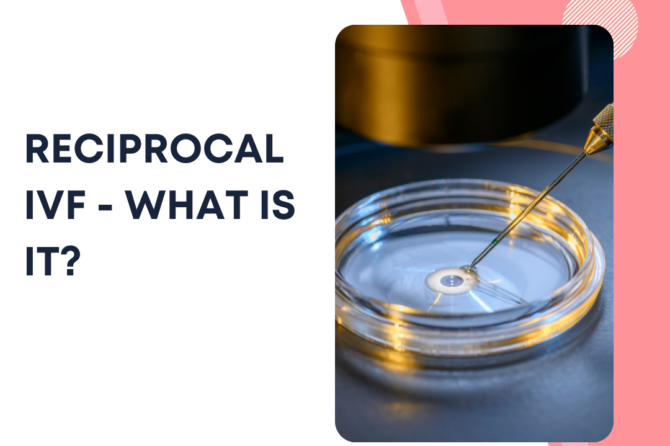
    Reciprocal IVF is a revolutionary family-building option designed primarily for lesbian couples, allowing both partners to participate biologically and emotionally in the creation of their child. Here’s a closer look at this process, its role in surrogacy, and its broader implications. What is IVF? IVF (In Vitro Fertilization) is a well-established fertility treatment where eggs are retrieved from the ovaries, fertilized with sperm in a laboratory, and implanted into a uterus. It is used widely to address various infertility challenges. What is Reciprocal IVF? Reciprocal IVF takes traditional IVF a step further by enabling both partners in a same-sex female couple to share in the reproductive journey. One partner provides her eggs, contributing her genetic material, while the other partner carries the pregnancy, creating an unparalleled sense of shared parenthood. Steps in the Reciprocal IVF Process Egg Donation and Ovarian Stimulation: The partner donating eggs undergoes hormonal treatments to stimulate egg production. Once mature, the eggs are retrieved through a minimally invasive procedure. Fertilization: Donor sperm is used to fertilize the retrieved eggs in a laboratory setting, creating embryos. Embryo Transfer: The resulting embryos are transferred to the uterus of the partner who will carry the pregnancy. Hormonal treatments are often administered to prepare her body for implantation and pregnancy. Pregnancy Monitoring: After implantation, the carrying partner is closely monitored to ensure the pregnancy progresses healthily. Reciprocal IVF and Surrogacy In cases where neither partner can carry a pregnancy, reciprocal IVF can be integrated into surrogacy. The embryo created from one partner’s egg and donor sperm can be implanted in a surrogate who will carry the baby to term. This approach offers flexibility for diverse family-building needs, including those involving health concerns or personal preferences. Advantages of Reciprocal IVF Reciprocal IVF offers unique benefits for same-sex female couples, ensuring emotional fulfillment and equal participation in family-building. Here are the detailed advantages: 1. Shared Biological Parenthood Enables one partner to contribute genetically by donating eggs, while the other carries and nurtures the baby during pregnancy. Fosters a deep connection between both partners and the child. 2. Empowering Inclusivity Provides LGBTQIA+ couples a path to biological parenthood that respects and celebrates their identities. Ensures equal participation in creating and raising a family. 3. Personalized Family Dynamics Couples can decide roles based on personal preferences, health considerations, or medical advice. Offers flexibility in how both partners contribute to the process. 4. Emotional Fulfillment Strengthens the emotional bond between partners by involving both in critical roles during conception and pregnancy. Creates shared experiences, making the parenting journey even more meaningful. 5. Legacy Building Provides an opportunity for one partner to pass on their genetic legacy while both partners nurture the child. Establishes a meaningful biological connection to future generations. 6. Adaptability for Surrogacy If neither partner can carry a pregnancy, the fertilized embryos can be transferred to a surrogate, enabling family-building regardless of medical barriers. 7. Advanced Fertility Options Leverages cutting-edge reproductive technology for improved outcomes, increasing the chances of a successful pregnancy. Emotional and Social Benefits Reciprocal IVF is not just about medical science—it’s about creating deeper bonds and redefining family. The process acknowledges the emotional importance of parenthood and ensures inclusivity for couples who might otherwise face barriers to biological reproduction. Why Choose Reciprocal IVF? For Family: It provides an avenue for both partners to experience parenthood uniquely. For Love: Strengthens emotional ties through shared experiences. For Inclusion: Promotes equality in reproductive opportunities for LGBTQIA+ families. Reciprocal IVF is reshaping the way families are built, blending cutting-edge science with the emotional needs of modern families. Whether used independently or as part of a surrogacy journey, it is a testament to how far reproductive medicine has come in fostering diversity and inclusion in parenthood. Contact MediPocket Surrogacy USA for premium Surrogacy service. We make miracles happen and countless intended families are on board with us.

    Read more
  • Who Determines the Gender or Sex of the Baby?

    Who Determines the Gender or Sex of the Baby?

    Gender or Sex of the baby is considered to be the most awaited news that people, especially parents want to hear. In the Mediaeval times,the birth of a Girl child is considered unethical and Gratuitous whereas the arrival of a Boy will light up the whole town. Do the same circumstances occur even in this 21st Century? Maybe. In slime parts of Rural India, the need for the Boy is so immense that if a woman gives birth to a girl, she is blamed for the unwanted gender. The Hospitals and its corridors have heard more gasps and mutters over the fact that a lady has gone through hours of labour pain, only to deliver an unneeded child. Isn’t that obnoxious? Everybody blames the birth-giver for the current circumstances but nobody knows that the creation of a Gender is completely relied on the male, rather than the female. In this blog, let’s explore on the topic of Gender of the baby and who is responsible for it What is Biological Sex ?   Biological sex refers to the physiological and genetic attributes that distinguish male and female organisms. These attributes are typically categorised based on reproductive anatomy, chromosomes, and secondary sexual characteristics.  Each human cell contains 23 pairs of chromosomes, and the 23rd pair determines an individual’s biological sex. Both men and women carry one pair of sex chromosomes, but they differ in the combination they contribute to the child: Women: Carry two X chromosomes (XX). Men: Carry one X and one Y chromosome (XY). During fertilisation, if a sperm carrying an X chromosome fertilises the egg, the resulting combination (XX) leads to a female embryo. If a sperm carrying a Y chromosome fertilises the egg, the combination (XY) results in a male embryo. From the above description of the Biological Sex, it is clearly evident that the Gender of the baby is determined only through the sperm, which carries either the X Chromosome or Y Chromosome. In no way the mother who conceives is responsible for gender selection. Why do some prefer Boy children? Economic Considerations Historically, sons were seen as providers and inheritors, responsible for carrying on the family name and lineage. This perspective is deeply ingrained in certain communities where economic activities are closely tied to agriculture and family businesses. Dowry System The prevalence of dowry in certain regions puts financial pressure on families with daughters. The expectation to provide a dowry can be a significant economic burden, leading to the preference for sons as they are considered to be future earners rather than financial liabilities. Social Security: Sons are often viewed as a form of social security for parents, especially in their old age. The belief that sons will take care of their parents in later years contributes to the preference for male children. Cultural Norms and Traditions: Cultural norms and traditions, deeply rooted in patriarchal structures, play a role in perpetuating son preference. The desire for male heirs is sometimes reinforced by societal expectations and beliefs. Educational and Employment Opportunities: In certain communities, limited educational and employment opportunities for women contribute to the perception that sons are better equipped to contribute economically to the family. Discrimination Against Women: Deep-seated gender discrimination against women, often manifesting in restricted mobility, limited access to education, and unequal treatment within families, reinforces the preference for male children. To eliminate this discrimination, Sex Education and knowledge about the scientific terms regarding the Chromosome and sperm is necessary among the piers. What is Sex Education? Sex education, also known as sexuality education, is a broad term encompassing the teaching and learning of topics related to human sexuality, including the biology of sex, reproductive health, relationships, and sexual health. The goal of sex education is to provide accurate information, promote healthy attitudes and behaviors, and equip individuals with the knowledge and skills to make informed decisions about their sexual and reproductive lives. Topics Covered in Sex Education Regarding Biology: Biological Sex:  Understanding the physiological and genetic aspects that determine male and female characteristics. Reproductive Anatomy:  Learning about the structures and functions of the reproductive organs in both males and females. Menstrual Cycle and Puberty: Explaining the biological processes of puberty, including the menstrual cycle, changes in secondary sexual characteristics, and hormonal fluctuations. Conception and Pregnancy:    Understanding the process of conception, foetal development, and the stages of pregnancy. Contraception and Safe Sex: Providing information on various methods of contraception and promoting awareness of safe sex practices to prevent sexually transmitted infections (STIs) and unintended pregnancies. Sexual Health and Hygiene: Promoting awareness of sexual health, including hygiene, regular health check-ups, and the importance of communication in sexual relationships. Gender Identity and Sexual Orientation: Discussing diverse aspects of gender identity, sexual orientation, and respecting individual differences. How to Learn More About Sex Education? School Programs Many schools include sex education as part of their curriculum. Check with educational institutions to understand the topics covered and the resources available. Online Resources Numerous reputable websites and online platforms offer accurate and reliable information on sex education. Look for resources from health organisations, educational institutions, and government health departments. Healthcare Providers Consult healthcare providers, such as doctors, nurses, or sexual health clinics, for personalised information and guidance on sexual health. Books and Publications There are many books and publications written by experts in the field of sexual health and education. Look for resources that provide comprehensive and evidence-based information. Community Workshops and Programs Attend community-based workshops, seminars, or programs that focus on sexual health and education. Local health organisations or community centres may organise such events. Counselling Services Seek counselling services from professionals who specialise in sexual health and education. They can provide guidance and address individual concerns. It’s essential to approach sex education with an open and non-judgmental mindset, fostering an environment where individuals feel comfortable seeking information and asking questions. Knowledge about sexual health empowers individuals to make informed decisions that contribute to their overall well-being.

    Read more

Photostream